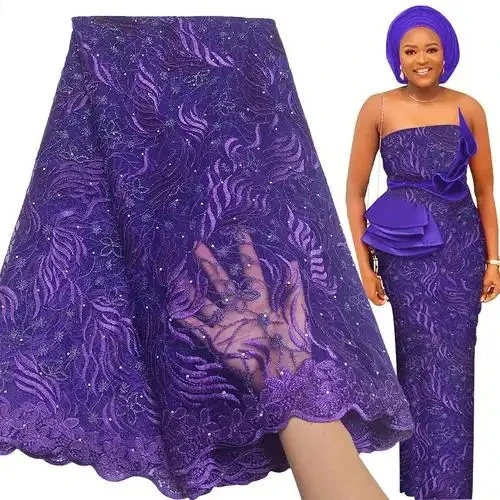
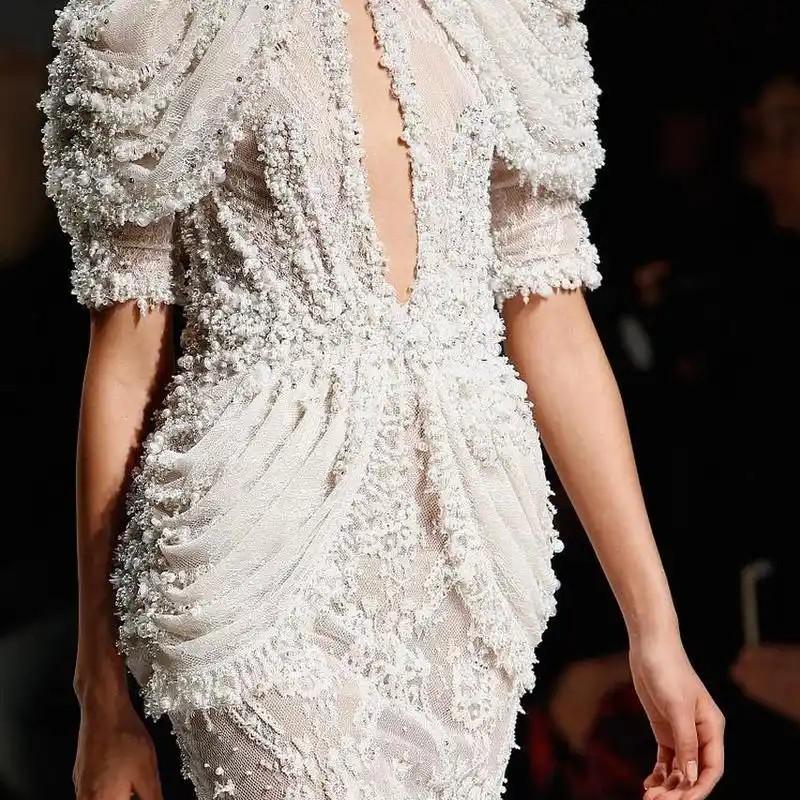
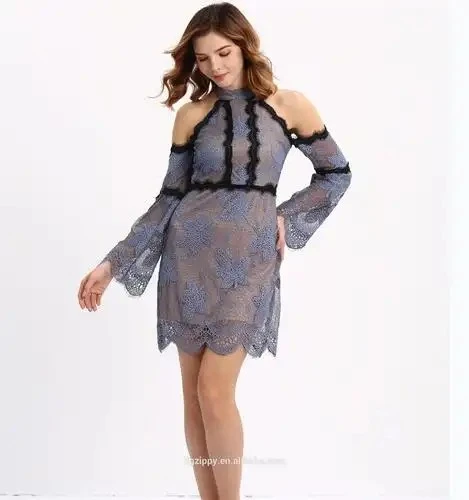
Lace for Dressmaking is a lightweight fabric with a mesh structure and decorative patterns formed through weaving, embroidery or warp knitting. Commonly used materials include cotton, polyester, nylon, etc. It is mainly used for local splicing, edge decoration or overall covering of clothing to achieve structural connection and appearance design requirements.
Features
Stable Pattern Precision
The computer-controlled jacquard loom independently controls thousands of warp yarns in a single weaving cycle, maintaining pattern repeatability within ±0.3mm. This makes it suitable for multi-batch orders requiring high pattern consistency.
Strong Multicolor Weaving Capability
Supports simultaneous weaving of up to ten different colored yarns. The electronic color selection system enables rapid color switching, enabling complex multicolor designs without increasing weaving time.
Abrasion-Resistant Structure
The back of the fabric utilizes a floating long-thread weave, increasing the single-point friction stress distribution area by approximately 18%. Combined with the high-density interwoven structure, the finished product exhibits no noticeable pilling after over 10,000 abrasion cycles.
High Weave Strength
The jacquard structure utilizes over 800 warp yarns in a single pattern, resulting in more even warp tension distribution and an approximately 25% increase in overall tensile strength, making it suitable for high-intensity applications.
Use
Because of its exquisite appearance and elegant style, lace fabric is widely used in the following fields:
1. Clothing: often used in dresses, wedding dresses, underwear, especially women's clothing, can show women's exquisite figure and romantic atmosphere .
2. Home decoration: used for curtains, bedding, tablecloths, etc., to add a romantic and gorgeous atmosphere .
3. Other decorations : such as pillow cases, home textiles, etc., to enhance the overall decorative effect .