

Woven Fabric
Shaoxing Handi Trading Co., Ltd. was established in September 2023 and is based in Shaoxing, Zhejiang. The company focuses on product quality and customer service, specializing in the processing and sale of various products such as clothing, home textiles, bags, shoes, hats, and other surface and auxiliary materials.


Why Choose Us
Our Factory
Located in Keqiao, Shaoxing—the heart of the textile industry—our factory is well-positioned with abundant cooperative resources to meet diverse dyeing and printing needs, providing tailored solutions for customers' unique and stylized orders.
Production Capacity
Our facility is equipped with 12 digital printing production lines, capable of processing cotton, linen, silk, nylon, leather, polyester, and various multi-component blended fabrics. We produce up to 30,000 meters of digital fabric daily.
Our service
We offer customized solutions on demand, ensuring guaranteed quality and quantity, competitive prices, and high-quality services tailored to your needs.
Woven fabrics are produced in simple or complex weaving machines that combine warp and weft threads at right angles. The surface structure can be clear, sparse or non-porous. They can be very light or very heavy. The pulls vary depending on the weave; however, it is low voltage compared to knitting.

Durability and Longevity
One of the most cherished qualities of woven fabric is its durability. This stems from the very nature of its construction—interlocking warp and weft threads in a methodical manner provide structural integrity unmatched by other types of fabric. This crisscross pattern ensures that the fabric can withstand tension and stress, making it ideal for daily wear garments and items that are subject to regular use.
Versatility
From sheer chiffons to robust canvases, the range of textures, weights, and finishes available allows for an endless array of creative possibilities. In designing collections, leaned on this versatility to mix and match fabrics for varied effects—combining a stiff, heavy canvas for structured pieces with a light, airy voile for draping and flow.
Breathability
Breathability is a quality of woven fabrics that shouldn't be underestimated, especially when designing for comfort and wearability. The interlaced structure of these fabrics allows air to circulate through the material, making them incredibly breathable compared to their knitted counterparts.
Ease of Maintenance
While the care requirements for woven fabrics can vary depending on the material and finish, many are surprisingly easy to maintain. Cotton and linen, for instance, can be washed and ironed at home, making them practical choices for everyday clothing. Even more luxurious weaves, like certain silks and wools, have been treated to be more resistant to wrinkles and stains, reducing the need for frequent dry cleaning.
Aesthetic and Texture
Lastly, the aesthetic appeal and texture of woven fabrics are qualities that can't be overlooked. The very method of weaving allows for a multitude of patterns, from simple checks and stripes to complex jacquards and brocades. This diversity lets designers like myself tell a story through texture and pattern, adding depth and interest to collections.
Types of Woven Fabric
Plain Weave
A plain weave is formed when the weft yarns are wrapped over a wrap and under another yarn. Hence, they are interlocked in a manner that forms stripes of alternating colors of the wrap yarn. The yarn's weight and density depend on its thickness and how it's washed. This technique is commonly used to create school uniforms, shirts, and bed linen.
01
Twill Weave
Twill weave forms a diagonal pattern to create a durable and heavy-weight fabric suitable for products like rucksacks and jeans.
02
Satin Weave
The weft yarns were laid over four to seven wrap yarns to allow the light to reflect. This creates a soft and glossy appearance. However, the yarns lose their durability but can be used for dresses.
03
Herringbone Weave
Herringbone weave is similar to twill and creates a chevron pattern. This weave is often made of wool yarn.
04
Pile Weave
Velvet is the best example of pile weaving. It has a raised texture created by adding more yarns to the formation that is raised up from the surface to form a nap.
05
|
HSN Code |
Product Description |
|
55134900 |
Other woven fabrics |
|
5514 |
Woven fabrics of synthetic staple fibres, containing less than 85% by weight of such fibres, mixed mainly or solely with cotton, of a weight exceeding 170 g/m2 |
|
55142300 |
Other woven fabrics of polyester staple fibres |
|
55142900 |
Other woven fabrics |
Apparel and Accessories: T-shirts, skirts, jackets, coats, blouses, dresses, scarves, belts, ties, gloves, caps, backpacks, bags, and wallets.
Footwear: Boots, formal shoes, sneakers, and sandals.
Home Decor: Furniture covers, drapes, and cushion covers.
House Accessories: Towels, tablecloths, carpets, and bed linens.
Industry Applications: Conveyor belts, sails, tarps, filters, and tents.
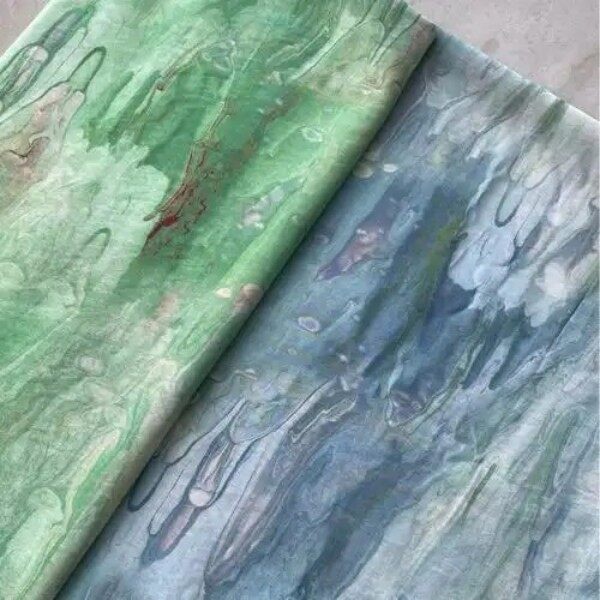
Production process of Woven Fabric
Yarn preparation
Fibers are spun into yarns and prepared with specific properties tailored for either the warp (longitudinal yarns) or the weft (transverse yarns).
Warping
The warp yarns are arranged on a beam to prepare for weaving. The warp threads are held taut and parallel, and as such must be strong and durable.
Weaving
During weaving, the weft yarn passes over and under the warp yarns in various patterns. The primary types of weaves are plain weave, twill weave, and satin weave. These basic types have been extrapolated into a variety of diverse patterns that serve both form and function.
Finishing
After weaving, the fabric undergoes several finishing processes, which might include bleaching, dyeing, printing, and treatments to enhance performance characteristics like water resistance or shrinkage prevention.
FAQ
As one of the leading woven fabric manufacturers and suppliers in China, we warmly welcome you to buy bulk woven fabric for sale here and get quotation from our factory. All customized products are with high quality and competitive price.
process fabric, Rayon Dyed Woven Fabric